Selling complex technology
Pre-sales and solution design for vendors and integrators: positioning, the technical narrative, and a business case that survives the CFO's second question.


Independent technology consultant · Serbia & Spain
Independent consulting on cloud, machine learning and applied AI. The solution gets designed, then explained to the people who have to sign for it — in plain language, with the economics worked out.
The work
Engineering describes a system. The business decides on an outcome. Most projects stall in the gap between those two sentences — and that gap is where I work. Every proposal exists in both columns at once.
Managed Kubernetes, autoscaled across availability zones
A traffic spike stops costing you a night of downtime — and you stop paying for idle capacity the rest of the year
Speech-to-text and synthesis pipeline, tuned on your own domain vocabulary
Every customer call becomes searchable text, and your agents stop writing summaries by hand
Retrieval layer over your internal document base
New hires find the answer themselves instead of interrupting the one person who knows it
Phased migration from on-premise to hybrid, over two quarters
Capital expense becomes a monthly line you can forecast, defend, and cut
Services
Pre-sales and solution design for vendors and integrators: positioning, the technical narrative, and a business case that survives the CFO's second question.
Finding the places in your business where AI returns more than it costs, and saying so plainly when it doesn't. Pilots designed to answer a question, not to demo well. Agent factories included: how many agents, which systems they may touch, where a human signs off, and what one run costs.
Transcription and speech synthesis put to work: call analytics, voice interfaces, accessibility, media production. Model selection, tuning, and the pipeline around it.
Architecture and migration for infrastructure that simply has to keep running. An honest assessment of what you have, a plan for what you need, real numbers for both.
Architecture, sizing and technical supervision for software other people build — mobile applications included. How hard the thing really is, what it will cost, which parts are risky, and whether the plan survives contact with a team. I don't take the keyboard.
Selected work
Clients are described, not named: most of this work touches commercial pipelines and sanctions exposure, and that is not mine to publish. The numbers are theirs and they are measured.
Water treatment for heavy industry · multi-million revenue, deliberately small team
The situation
The company was entering new countries where nobody on staff spoke the language well enough to read a tender notice — and the work it sells is only ever announced in local tender notices and investment news.
What was built
A platform of four AI agents feeding one CRM. The first reads each market for water-treatment scopes attached to large industrial investment projects. The second screens every find for sanctions exposure, blocks what fails and keeps watching what passes. The third verifies contacts and finds the person who actually owns the problem. The fourth opens the conversation, by email and by messenger, in the local language. Staff and agents work the same CRM; a Power BI dashboard shows the pipeline.
The result
More than 100 relevant leads in the first three weeks, in markets the team could not read a month earlier. Relevant is a strict word here: a person inside the company checked each one by hand, and the prospect replied.
AI agents · Sanctions screening · CRM with an open API (Attio) · Power BI
Consumer brand building a partner network across hotels, restaurants and cafés
The situation
Partners were needed quickly and in volume, and the only way the company knew to find them was a person with a map, a phone and a list — which sets the ceiling at a few dozen conversations a week.
What was built
Two agents on a shared database that the CRM reads from. The first searches — OpenAI's tools alongside Google Search and Maps — and judges each candidate against the partner criteria before writing it down. The second makes the first approach in writing, explains what is on offer, and files every reply back into the same database. The same agent was tested on messaging and on voice calls, so the channel can widen without rebuilding anything.
The result
About 200 candidates checked in one week, 35 of them shortlisted as worth a conversation.
AI agents · OpenAI tools · Google Search & Maps · CRM-backed database · Voice pilot
Established business testing a new sales model · two people seconded for three months
The situation
The hypothesis deserved a test, but not at the price of turning the main business away from its own work. Running the pilot inside the existing systems would have spoiled both: the experiment by the old constraints, the company by tools nobody had agreed to keep.
What was built
A separate contour in the cloud, on Kubernetes, holding the pilot's own stack: a cloud CRM, its databases, the new digital marketing platform. Two people moved into it with a KPI set of their own and ran the new business model for three months, without a single change to the systems the company lives on.
The result
A clean experiment instead of an argument: what the new platform really demands of IT, what it really costs per month, and a migration plan for the rest of the company that does not require stopping the business to carry it out.
Kubernetes · Managed cloud services · Cloud CRM · Cost modelling · Migration planning
If something here resembles your situation, the first call costs nothing.
The arithmetic
Idle capacity is the cheapest money on the table and the least often counted. Put in what you actually run — this is your arithmetic, not my estimate, and it stays in your browser.
Paid for nothing, per year
per month
The number is only the ceiling — some of that capacity is headroom you chose on purpose. Telling the difference is most of the work.
Stack
Seventeen years inside global technology companies — enterprise infrastructure, cloud platforms and machine learning, on the side that has to deliver what was sold. Long enough to know which promises hold after the contract is signed.
How it is built
The same stack, split by one question asked layer by layer: does owning this buy you anything? Hardware and the workloads on top usually stay. The middle usually does not.
Four layers kept because they have to be yours, three rented because owning them buys nothing.
About
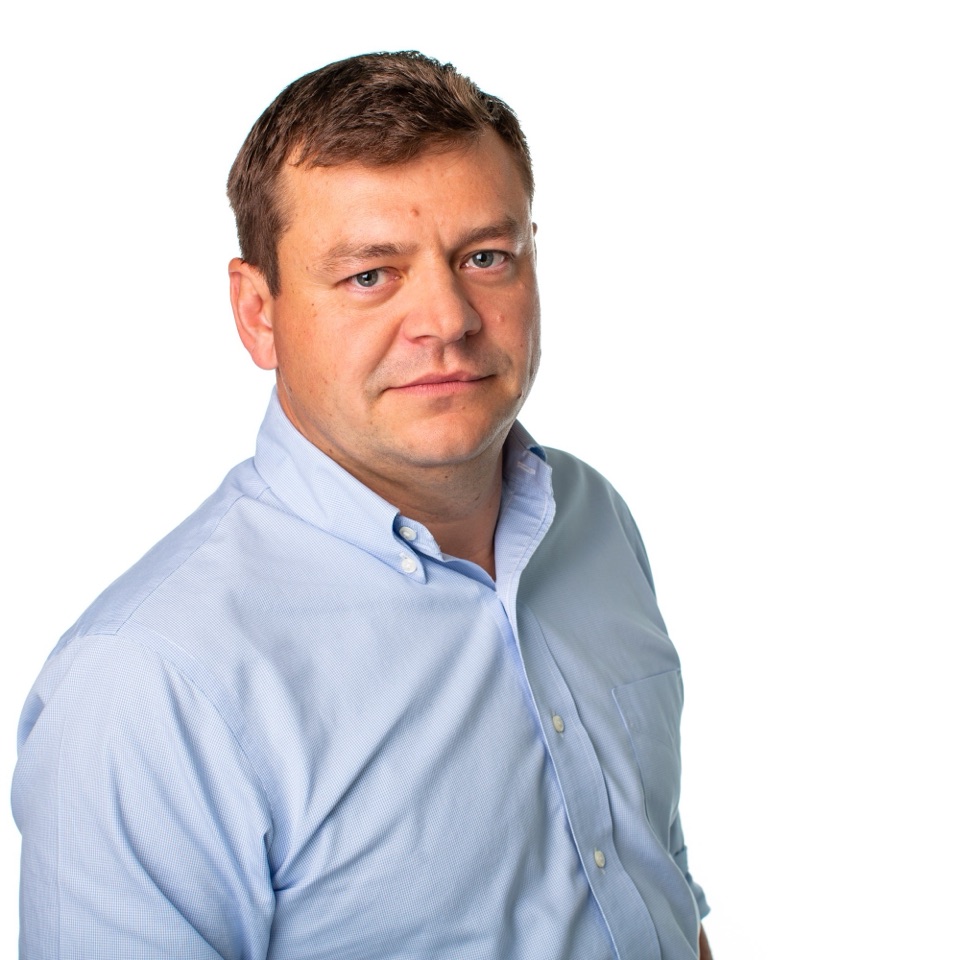

Anton Gostev
Consultant, entrepreneur, engineer
My name is Anton Gostev, and I spent seventeen years inside large technology vendors: eleven at Microsoft, three at Yandex International, two at IBM and one at Dassault Systèmes.
The work always had the same shape — standing between an engineering team and a customer who has to sign, and making sure both were describing the same thing.
Today I do it on my own, through two registered practices: one in Serbia, one in Spain. You talk to the person who does the work, because there is no one else to hand it to.
Where those years went
How an engagement runs
Step 01 — Assess
A week or two: what you run, what it costs, where it hurts, and what the team already knows but hasn't been asked.
Step 02 — Plan
Architecture and a costed roadmap that separates what to do now, what to defer, and what to drop entirely.
Step 03 — Execute
Hands-on, alongside your team, or reviewing a vendor's work from your side of the table. Whichever the situation calls for.
Radar
Updated automatically · 27 Oct 2026
Infrastructure, applied AI and the security news that actually changes what you should do on Monday. Headlines link straight to the source.
The actions could have resulted in criminal charges had humans been behind the keyboard.
Read at source →
Use-based AI regulation assigns obligations by deployment risk but lacks an evidentiary object to carry them. A benchmark score is a property of a model; conformance of a deployment is a…
Read at source →
Alignment evaluations aim to assess whether large language models would engage in dangerous misaligned behaviour. Misaligned and evaluation-aware models might engage in alignment faking…
Read at source →
Not a bombshell, but it rivals pricier models on some tasks at a tenth of Astra's API price
Read at source →
https://developers.openai.com/api/docs/models/gpt-6.1-terra
Read at source →
Redmond joins growing list of software maintainers scrambling to patch compression flaw
Read at source →
A curated digest, not a mirror: headline, source and a one-line summary, with the link going to the publisher.
Contact
A first conversation costs nothing and usually takes half an hour. If I'm not the right person for it, I will say so and point you at someone who is.
What the first call looks like